

When One Life Ends, Another Sees Again
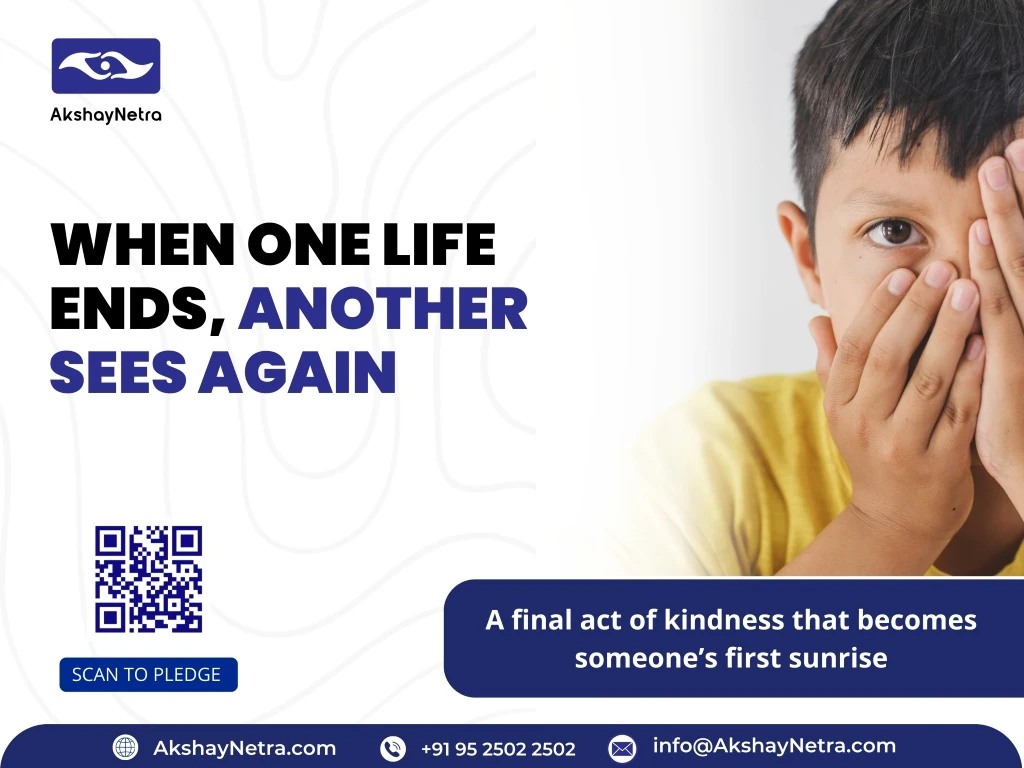
A final act of kindness that becomes someone’s first sunrise
A Rainy Night in Pune
It was a wet, quiet evening in Pune. The hospital corridors carried the familiar scent of antiseptic and an unspoken heaviness. Twenty-six-year-old Arjun lay in the operating theatre, not in hope of survival, but in the service of another life. Hours earlier, he had met with a road accident while returning home from work. Despite every effort, the doctors could not save him.
In the midst of grief, his parents made a decision of extraordinary courage. They chose to donate his eyes. Through their loss, they allowed his light to continue.
An Unexpected Morning of Light
Two days later, in another wing of the same hospital, Mrs. Lalita Rao, a retired schoolteacher, awoke after a corneal transplant. An infection had taken her sight nearly ten years earlier, gradually closing her world into darkness.
When the bandages were removed, the light stung her eyes, yet she welcomed it with quiet joy. She could see again. Shapes became faces, and colours returned after years of absence.
When she was told that her donor was a young man named Arjun, she paused and smiled gently. She remembered a student she once taught by the same name, a boy who loved to draw suns, each one with a smiling face. That afternoon, she picked up a pencil for the first time in years and drew a sunrise with two eyes inside it.
The Meaning Behind AkshayNetra
Stories like these reflect the purpose of AkshayNetra, an initiative by JJFIndia. The name itself carries a profound meaning: Akshay signifies eternal, and Netra means eyes. Together, they represent a vision that continues beyond one lifetime.
The initiative helps individuals pledge their eyes with ease, ensuring that when their journey ends, their sight can restore hope for someone living in darkness. It is not only a medical act but a deeply human one, connecting lives across time and circumstance.
The Science that Restores Sight
Behind the emotion lies a straightforward medical process. In eye donation, only the cornea - the transparent front layer of the eye - is transplanted. A single donor can restore vision to two individuals suffering from corneal blindness. The retrieval procedure is respectful, takes less than an hour, and does not disfigure the donor.
While medical expertise makes transplantation possible, it is human compassion that makes it meaningful. The success of such procedures depends entirely on awareness and timely pledges.
A Mother’s Quiet Strength
Months after the surgery, Arjun’s mother received a handwritten letter. It expressed gratitude from someone who could now see the world again. The words spoke of sunrises, colours, and the simple joy of recognising faces.
She framed the letter and placed it near a window where sunlight falls each morning. For her, it is a reminder that her son’s vision did not end; it simply found a new way to exist.
Seeing Beyond a Lifetime
Eye donation is not about loss; it is about continuation. It transforms grief into purpose and allows one life to gently illuminate another. Through AkshayNetra, individuals can pledge their eyes, receive confirmation of their decision, and ensure that their final act brings sight to those who need it most.
It is a legacy not measured in wealth or recognition, but in the return of light to someone’s world.
Conclusion
The gift of sight is one of the most profound forms of generosity. A single pledge can turn darkness into vision, dependence into independence, and despair into hope. By choosing to donate our eyes, we allow our last blink to become someone else’s first sunrise. In this quiet act of kindness, vision becomes eternal, and humanity finds its most meaningful expression.
MONTHLY MAGAZINE
Social media icons