

Sadder Than Death: When Sight Could Have Been Saved
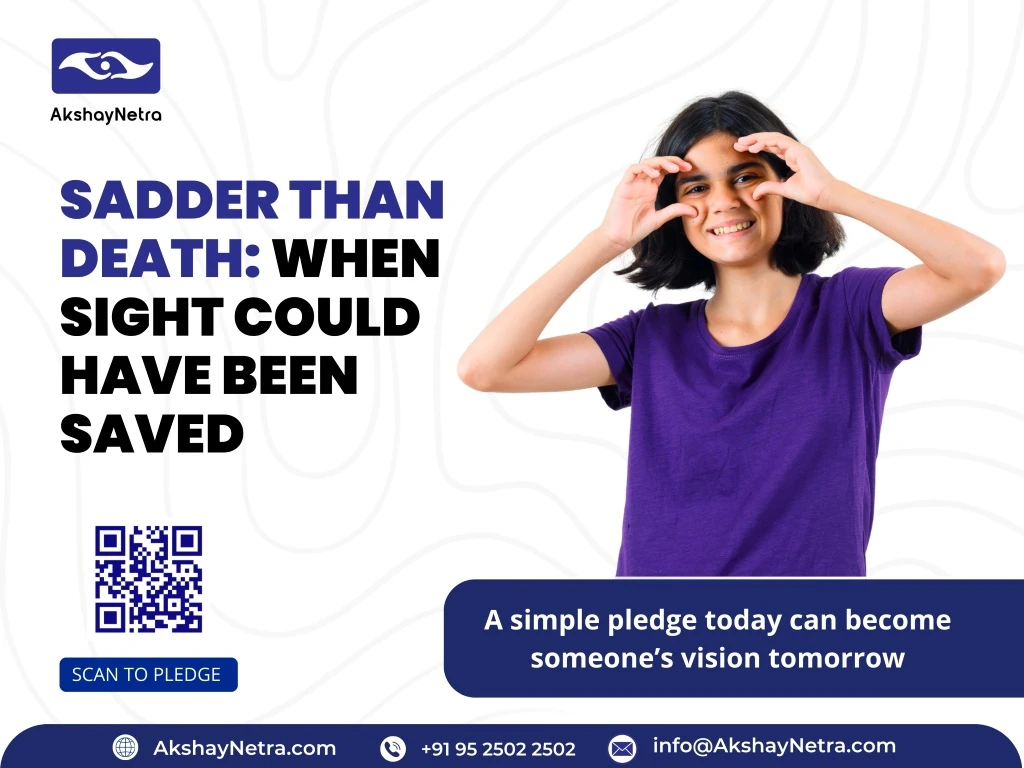
A simple pledge today can become someone’s vision tomorrow
A Loss That Could Have Been Prevented
There are griefs that fade with time, and then there are those that remain heavy because they carry the question of what if. Sometimes the deepest pain does not come from death itself, but from the knowledge that the suffering before it could have been avoided. It is the silence of missed chances, of help that never arrived, of awareness that came too late.
Swapnil lives with this kind of sorrow. He did not only lose a dear friend; he lost the possibility of a different life for someone who had lived for years without sight. His friend’s blindness was not beyond treatment. A corneal transplant could have restored vision, offering the chance to see loved ones, read, work, and move through the world independently. What makes the loss so profound is the realisation that this gift was possible, dependent only on the availability of a donor and timely care.
Understanding Corneal Blindness
Blindness affects millions worldwide, yet a large number of cases are either preventable or treatable. Corneal blindness, caused by damage or disease affecting the cornea, can often be reversed through transplantation. Modern medicine has made the procedure safe and effective, but it relies entirely on donated corneas.
The challenge is not medical capability but the gap between need and awareness. Many people are willing to help others but are unaware that pledging their eyes after death can restore sight for someone living in darkness.
The Role of Awareness and Compassion
This is where AkshayNetra steps in with a clear and compassionate purpose: to encourage eye pledging and spread understanding about its life-changing impact. A pledge made during one’s lifetime becomes a lasting act of kindness, ensuring that sight can be restored when the time comes.
Through collaboration with trusted eye banks, corneal donations are handled with dignity, medical care, and deep respect for both donors and their families. The process is simple, and guidance is provided at every step so that individuals can make informed and meaningful decisions.
One Pledge, Many Lives Changed
Eye donation does not diminish the donor; instead, it creates a legacy of light. A single donor can help restore vision for more than one person. For someone who has lived without sight, the ability to see again is not just a medical improvement; it is the return of independence, education, employment opportunities, and confidence.
It allows a child to read a book, a young adult to pursue a career, and a parent to recognise the faces of their family. These are ordinary experiences for many, yet they become extraordinary gifts for those who regain their vision.
Turning Grief into Purpose
Swapnil’s story reflects a reality shared by many. Across communities, there are individuals waiting for corneal transplants, their lives paused in uncertainty. Their hope depends not on complex technology, but on awareness, empathy, and the willingness of others to pledge their eyes.
When families understand the impact of eye donation, they often find comfort in knowing that their loved one’s final act brought light into another person’s life. In this way, loss is transformed into hope, and remembrance becomes a source of healing.
A Simple Decision with Lasting Impact
Pledging one’s eyes is a deeply humane act. It requires only awareness and consent, yet its impact extends far beyond a single lifetime. It ensures that fewer people remain in darkness and fewer families carry the burden of knowing that sight could have been saved.
Conclusion
Preventable blindness is not only a medical concern; it is a shared social responsibility. The pain of lost possibilities can be changed into a future of restored vision through awareness and action. By choosing to pledge our eyes, we offer more than sight - we offer dignity, opportunity, and hope. In doing so, we ensure that light continues, even after life has ended.
MONTHLY MAGAZINE
Social media icons